
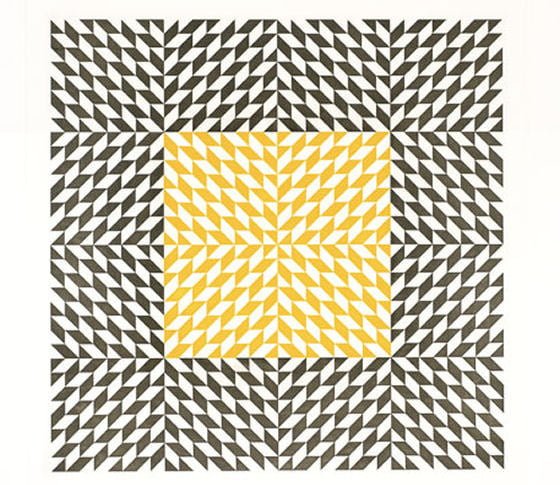
Anni Albers, often referred to as one of the most influential textile artists of the twentieth century, has been on my design-icons-to-write-about list for a while. She’s best known for her weaving – and it’s true that many of the textiles she produced were truly groundbreaking.
But it’s the beautifully tinted sketches she produced for her textiles, along with the screenprints that she concentrated on later in her career, that I’m particularly drawn to. More of these later.
 Anni Albers (1899-1994) was a weaver, textile designer, artist and writer. She and her husband Josef Albers (himself a famous teacher, writer, painter, and color theorist), have been rightly been described as “pioneers of twentieth-century modernism”.
Anni was also specifically one of the pioneering “Women Weavers of the Bauhaus”. She originally wanted to be a painter, but many disciplines at this famous teaching institute were closed to female students. Textiles, however, were deemed to be “women’s work” and it was through weaving, with the legendary Gunta Stölzl as her teacher, that Anni Albers learned to express herself as a bold abstract artist using fibre rather than paint.
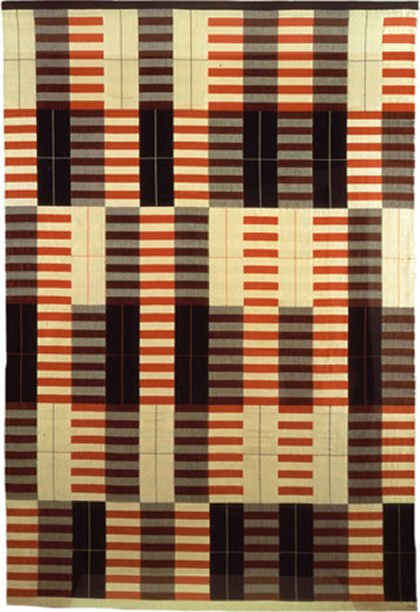
Black White Red, 1926, cotton and silk
During the 1920’s Anni and her fellow students embraced the emerging technologies and experimented with new materials for weaving such as cellophane, new synthetic yarns and metallic fibres.
The result was innovative, experimental textiles including reversible fabrics and materials with acoustic and light-reflecting properties. More than a little ironically, the Weaving Workshop went on to become one of the best known and most successful of the Bauhaus departments.
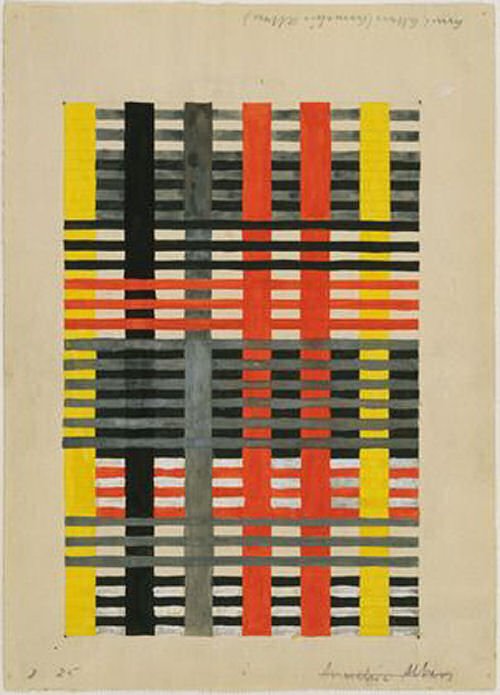
The above design by Anni Albers, produced 1926, was initially intended to be a wall hanging in cotton and silk. Rendered in gouache on paper, it’s now part of the permanent collection of the New York Museum of Modern Art.
Whilst it may have never become a wallhanging, this very contemporary looking design has been made into the striking Study Rug, below, as part of the Christopher Farr Editions project. These limited edition, hand-tufted rugs, based on the work of leading artists and designers, are designed to provide “collectible certified work from established artists at affordable prices.”

In 1933 Anni moved with Josef to the USA where he had been invited to teach at the experimental Black Mountain College in North Carolina. She continued with her weaving (which by now was being widely exhibited and winning awards), as well as designing and developing new textiles.
Red Meander, 1954, linen and cotton
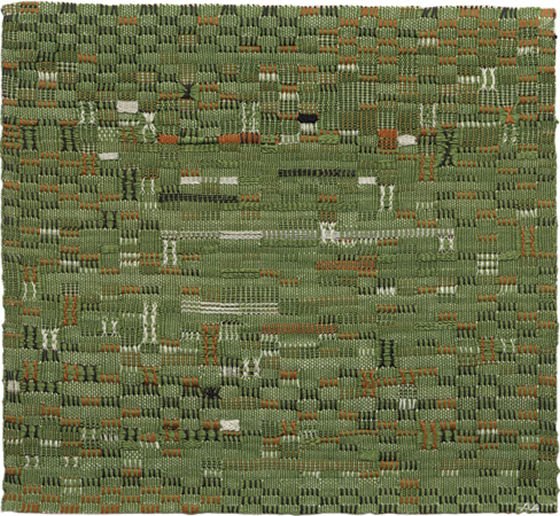
Pasture, 1958, cotton
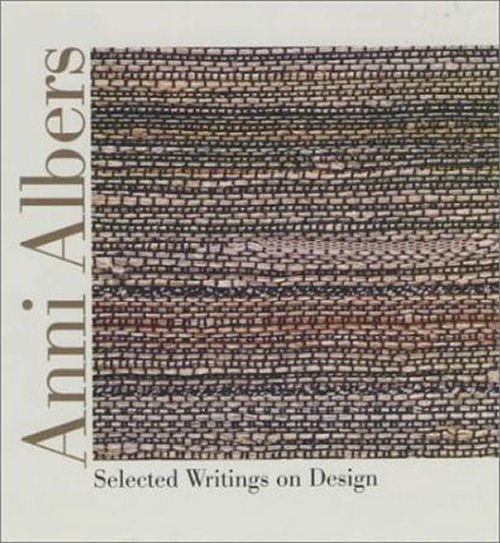
Anni also had a role at the college as a teacher, and wrote a series of essays on her philosophy of design and the changing role of the designer (now collected and published in the book Anni Albers: Selected Writings on Design
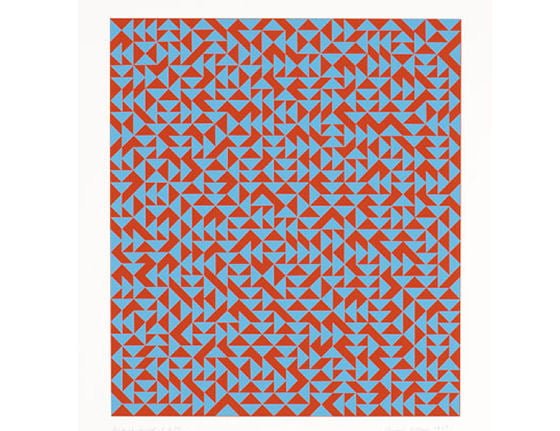
C, 1969, Screenprint
In 1963 Anni was introduced to printmaking and took to this new medium instantly and enthusiastically. She largely produced complex geometric designs in a range of colour palettes, some delicate and subtle, others vibrant and bold.
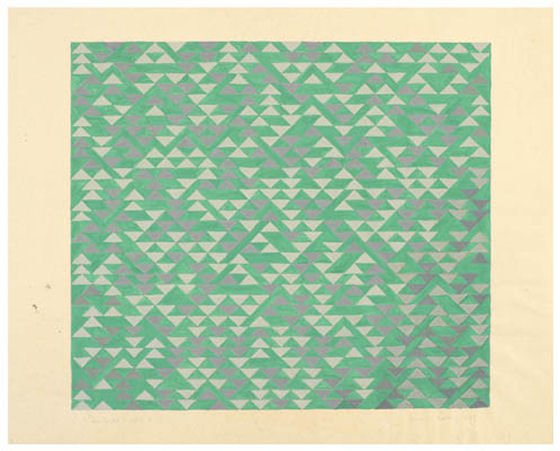
Study for Triadic II, 1969, Gouache on Blueprint Paper
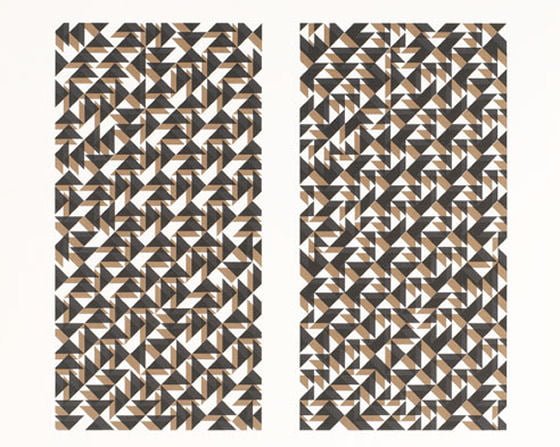
Fox II, 1972, Screenprint
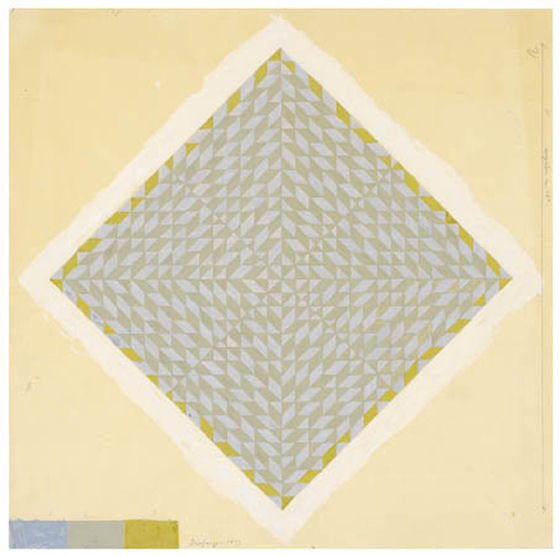
Study for Do V, 1973, Gouache on paper
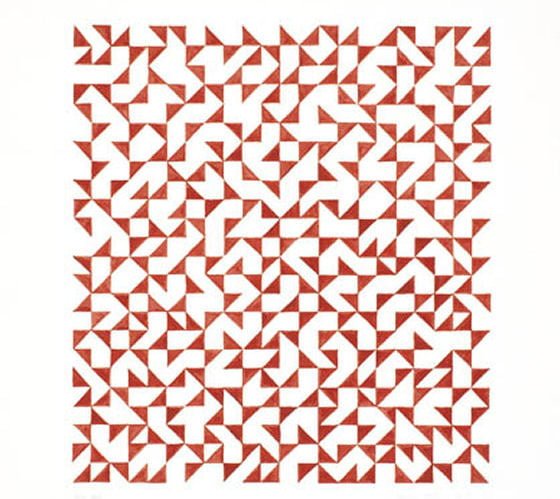
Triangulated Intaglio IV, 1976, Etching/Aquatint
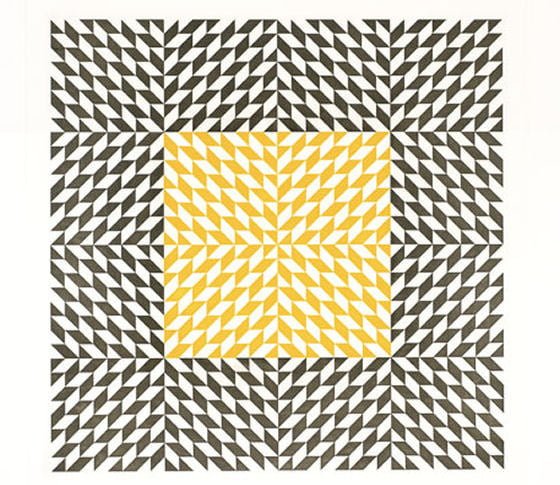
Etching/Aquatint – Second Movement II
 In 1965 Anni’s seminal text On Weaving
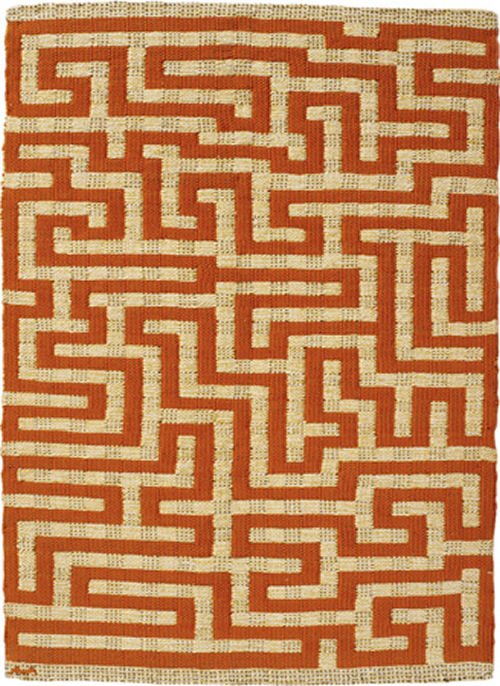
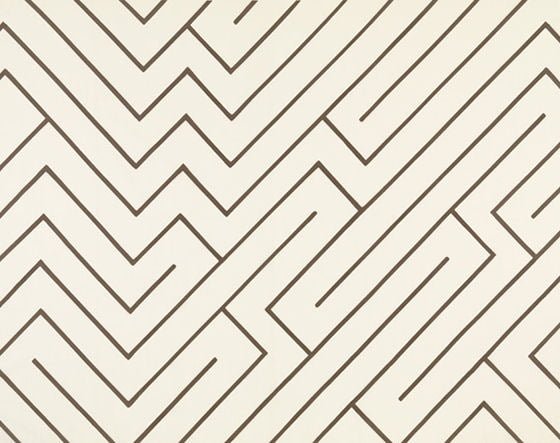 Maze, 1979, printed cotton fabric design
Anni continued to produce some textile commissions, but after moving to Orange, Connecticut in 1970 she gave up weaving to concentrate on her printmaking.
Continuing to work and travel into her later years, at the age of 91 Anni visited London where she was awarded an honorary doctorate by the Royal College of Art. She died in 1994 in Orange, Connecticut.
If you’d like to know more about Anni (and Josef) Albers and see more of her extraordinary work, visit the website of the Josef and Anni Albers Foundation. It’s a treasure trove of information on the lives and careers of these two influential artists and designers, including comprehensive galleries of their work and photographic archives.


Comments are closed.