

“Cement” (also known as “hydraulic”) tiles certainly don’t sound too glamorous, but don’t be deceived by the names, which come respectively from their principal ingredient and method of manufacture. Of which more later.
I recently saw stunning examples of cement tiles at the elegant Ca’n Prunera museum in Soller, Mallorca. A beautifully renovated example of Modernist architecture, this hidden gem houses a small permanent exhibition of art from the 19th and 20th centuries. The galleries include Picasso, Gauguin, Klee, Magritte, Basquiat and Miro, as well as local painter Juli Ramis, plus temporary exhibition spaces, an art library and a peaceful sculpture garden.
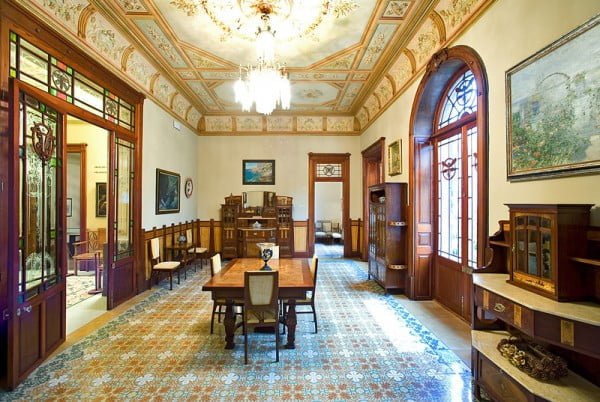
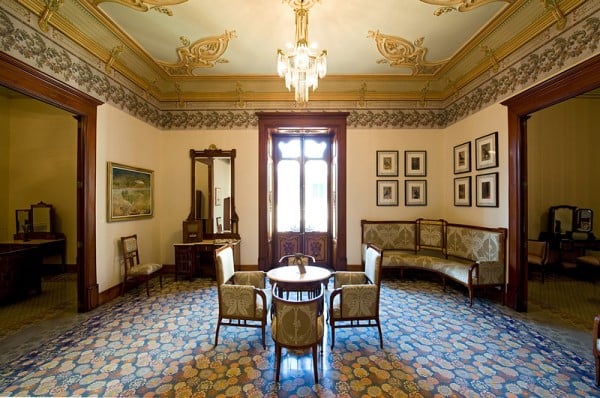
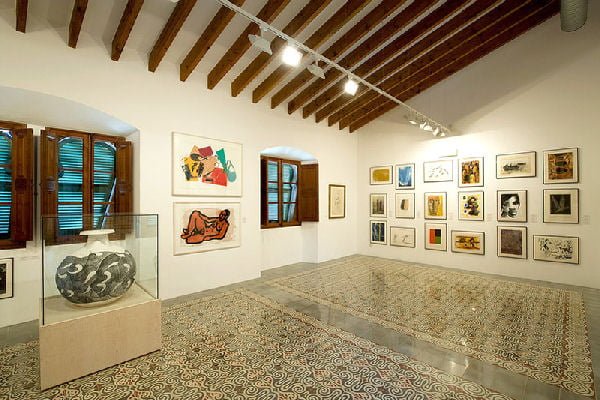
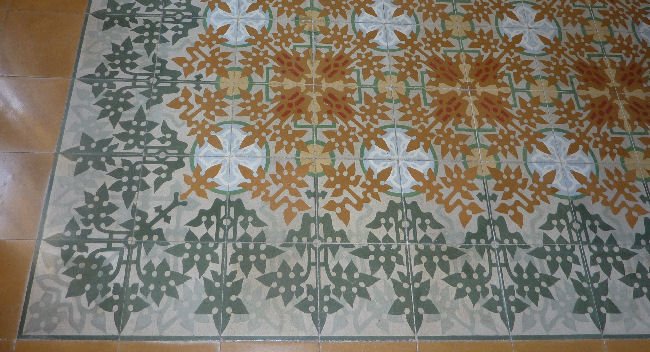
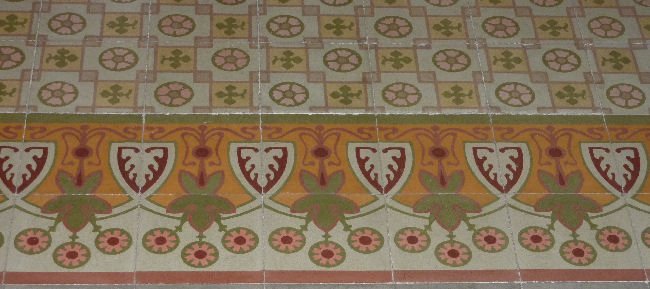
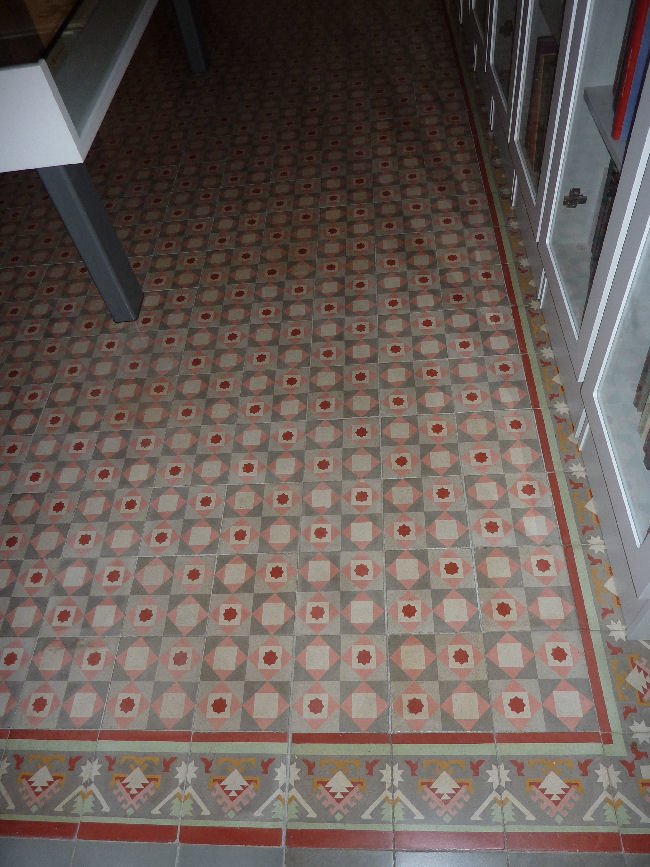
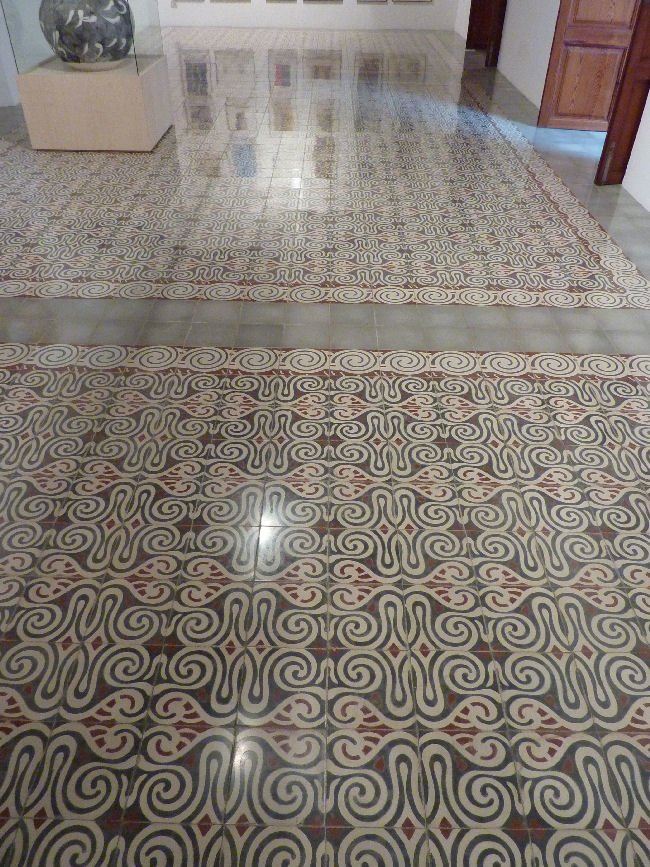
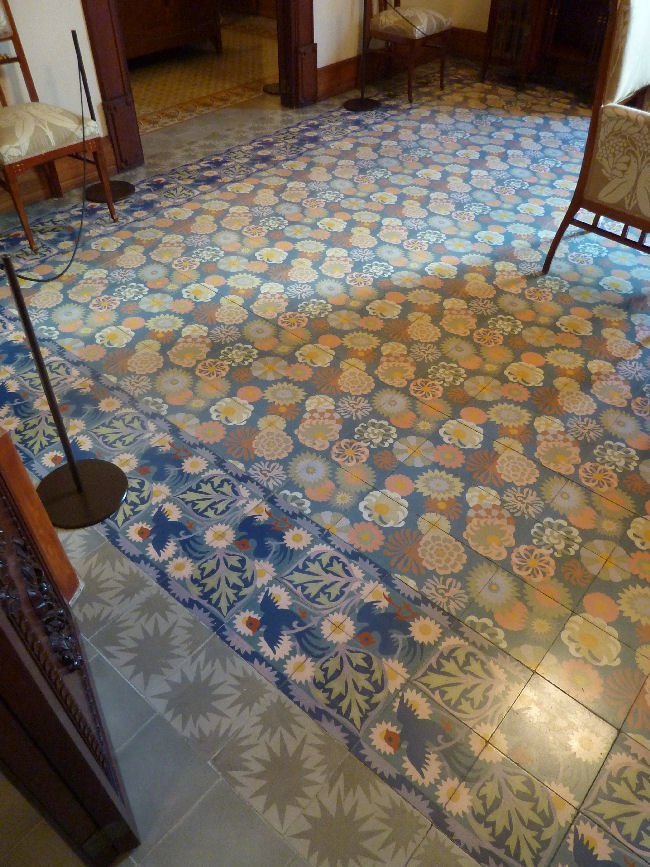
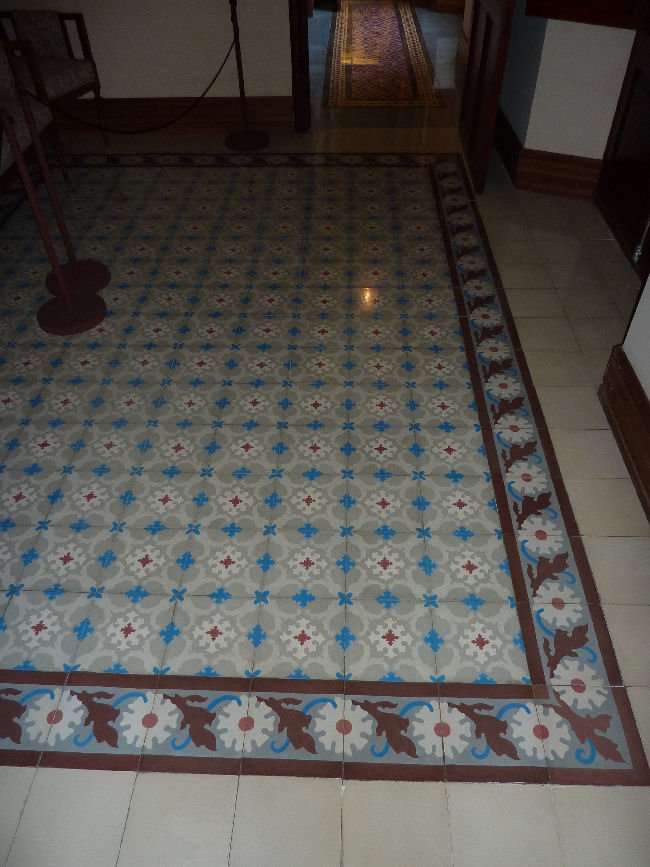
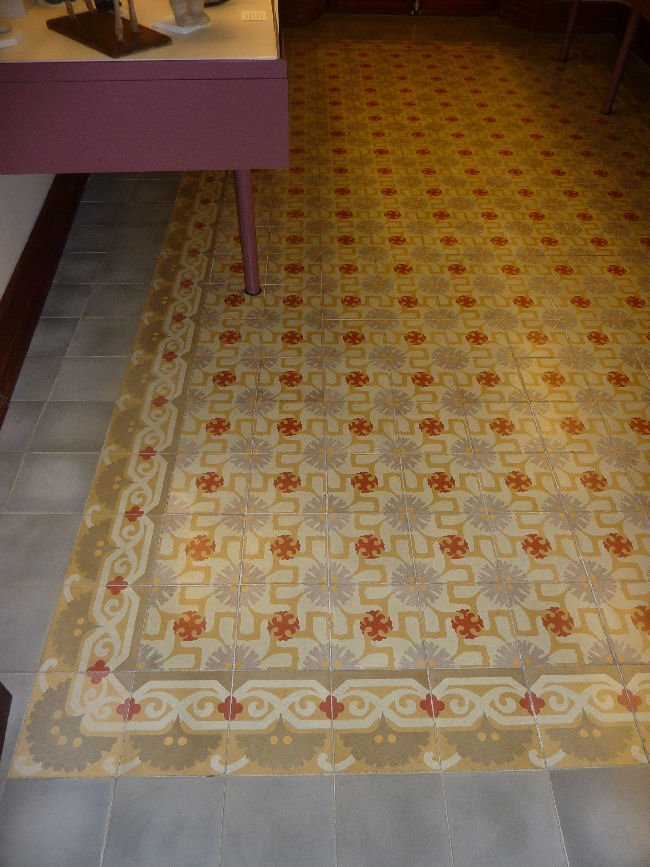
The mansion Ca’n Prunera was built between 1909 and 1911 by Joan Magraner Oliver, alias Joan Prunera, and remained the family home until 2006. The ground and first floors have been restored to their former glory, including some of the house’s original furniture, fittings and artefacts. Highlights are the spectacular sweeping staircase with ironwork balustrades, art nouveau glasswork lamps, and – my absolute favourite – different tiled designs on the floors of each of the rooms.
There seems to be much debate over the origins of the making of these (cement/hydraulic) tiles, but the process is believed to have spread from Europe to the rest of the world in the late 1800’s and continues virtually unchanged to the present day.
The making process is fascinating to watch. A mixture of coloured pigments and finely powdered marble and cement is carefully placed by hand into the various sections of a brass pattern mould that sits within a (usually square) metal frame. Once the patterned mould has carefully been removed the tile is backed with more cement products and the various layers squeezed together with either a manual or electronic hydraulic press. Hydraulic tiles aren’t glazed or fired in a kiln; they are left to air dry and then submerged in water to cure them, after which they must be left for at least 2 – 4 weeks before using.
This video by tile designers and makers Popham Design shows hydraulic tiles being made in Morocco (see more of their designs in this post: “A contemporary twist for traditional tiles”):
As they are made singly by hand, each cement tile is unique and expected to have slight imperfections, thus giving it character and individuality. Because the coloured design is pressed into the body of the tile, and is not painted on or part of a glaze, the colours and designs are incredibly durable, although this does also depend on the depth of the pigment layer as well as quality of the coloured pigments used. The best quality (and most expensive) are mineral-based, whilst non-mineral based pigments tend to fade more quickly with age and wear.
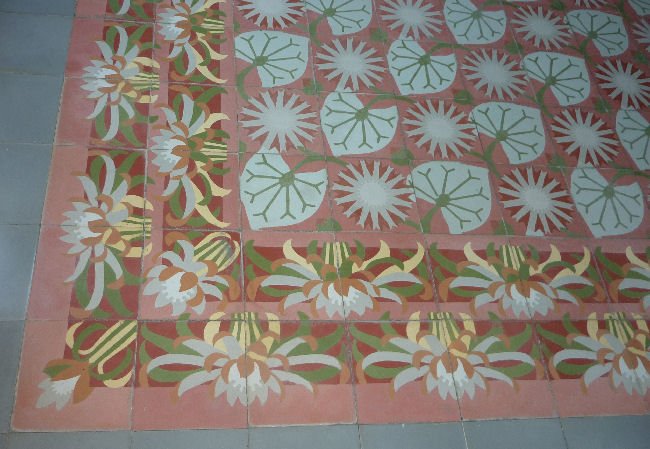
The photographs below were taken during our visit to Ca’n Prunera, so many apologies for the lack of professional quality. I hope, though, they give some idea of the range of beautiful patterns and subtle colours in these wonderful floors.
Comments are closed.